
When the Hindi OTT period series ‘Jubilee’ starring Prosenjit Chatterjee hit the screens this April, viewers lapped up Bollywood’s first real-life scandal. The rift between the Bombay Talkies husband-wife team of Himanshu Rai and Devika Rani, and the scandal that rocked the industry when she ran away with the hero of her film Najmul Hussain, were engrossing. But what made it more so was production designer Aparna Sud’s depiction of India in the 1930s and 1940s, largely through the use of Art Deco buildings.
In 2015, two period films — Dibakar Banerjee’s ‘Detective Byomkesh Bakshy!’ and Anurag Kashyap’s ‘Bombay Velvet’ — had also recreated sets with Art Deco motifs. In 2013, the Hollywood movie ‘The Great Gatsby’ starring Leonardo DiCaprio put the spotlight on Art Deco and fuelled tourist flow into Miami which has a fine collection of Art Deco buildings.
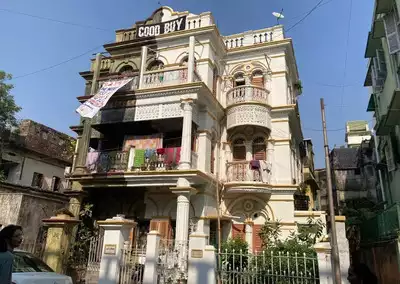
With its own array of Art Deco buildings — grand offices along Chittaranjan Avenue, cinema halls in central and south Kolkata, and residential homes in south Kolkata — the city is beginning to see renewed interest in the design style that first appeared in France before World War I and began flourishing internationally in the 1920s, 1930s and 1940s.
“There were also European and American architects who produced some of the best-known Art Deco buildings in Kolkata during the pre-Independence period,” said Das, mentioning Metro Cinema, Reid House on Red Cross Place and the Bow Barracks.
“Art Deco buildings became more popular in Kolkata after 1960 when the newly rich rejected the colonial style of the north Kolkata houses for their own residences and offices. To create their own individual signatures, they often deviated from the true Art Deco features and developed their own, which many refer to as Indie-Deco,” Das added.
Writer Amit Chaudhuri, who grew up marvelling at the Art Deco houses along the Marine Drive in Mumbai, was struck by the diversity of the same architectural style in Kolkata during his holiday visits.
“Unlike Mumbai, where the homes were similar, the houses in Kolkata had adopted and incorporated Art Deco features, semicircular balconies, circular windows and other motifs, but none resembled another. Each house is an experiment that has worked. They aren’t imitations,” said Chaudhuri, who resides in Kolkata and is one of the key advocates of preserving Kolkata’s architectural inheritance.
He is leading the revival of interest in Art Deco here by creating awareness among owners of buildings to prevent their destruction. The Art Deco houses on Purna Das Road, Dover Lane, Hindustan Park, Lansdowne Terrace, Southern Avenue, Sarat Chatterjee Avenue, Ballygunge Place and other neighbourhoods have a similar architectural style characterized by sleek lines, geometric patterns, and decorative elements. “When you add all the houses on a single lane or a neighbourhood, you have a sense of time in history, the sophisticated, cosmopolitanism of Kolkata at the time. These are historic features of a great city. This was an extraordinary phase. We must hang on to them. We are looking at the evidence of extraordinary culture,” he said.
“Unfortunately, many cinema halls are now out of business. In south Kolkata, several homes survive but many are also being pulled down to make way for multi-storied buildings,” said G M Kapur, the convenor of the Kolkata chapter of Indian National Trust for Art and Cultural Heritage (Intach) which has joined hands with CAL to file a PIL on conservation of Kolkata’s neighbourhoods by giving them the heritage precinct tag. The Regal Cinema building on S N Banerjee Road has recently been done up in Art Deco style and reopened with multibrand restaurants. A few years earlier, the facade of Metro Cinema, designed by Scottish-born American architect Thomas White Lamb, was restored and turned into a department store with a multiplex.
Architect Dulal Mukherjee stresses the need to conserve these buildings. “Kolkata’s Art Deco buildings have a certain sweetness to them. Mumbai has recognized the value. Marine Drive is lined with Art Deco houses that have survived because the city made a conscious decision to preserve them. Kolkata must do the same,” he said.